 Style
Style
When AI becomes a personal nutrition coach
Par Gabriel Goldberg
15 March 2026
4 min read
More and more executives are using AI to analyse their diet. A three-week experiment in discipline, protein and technology.
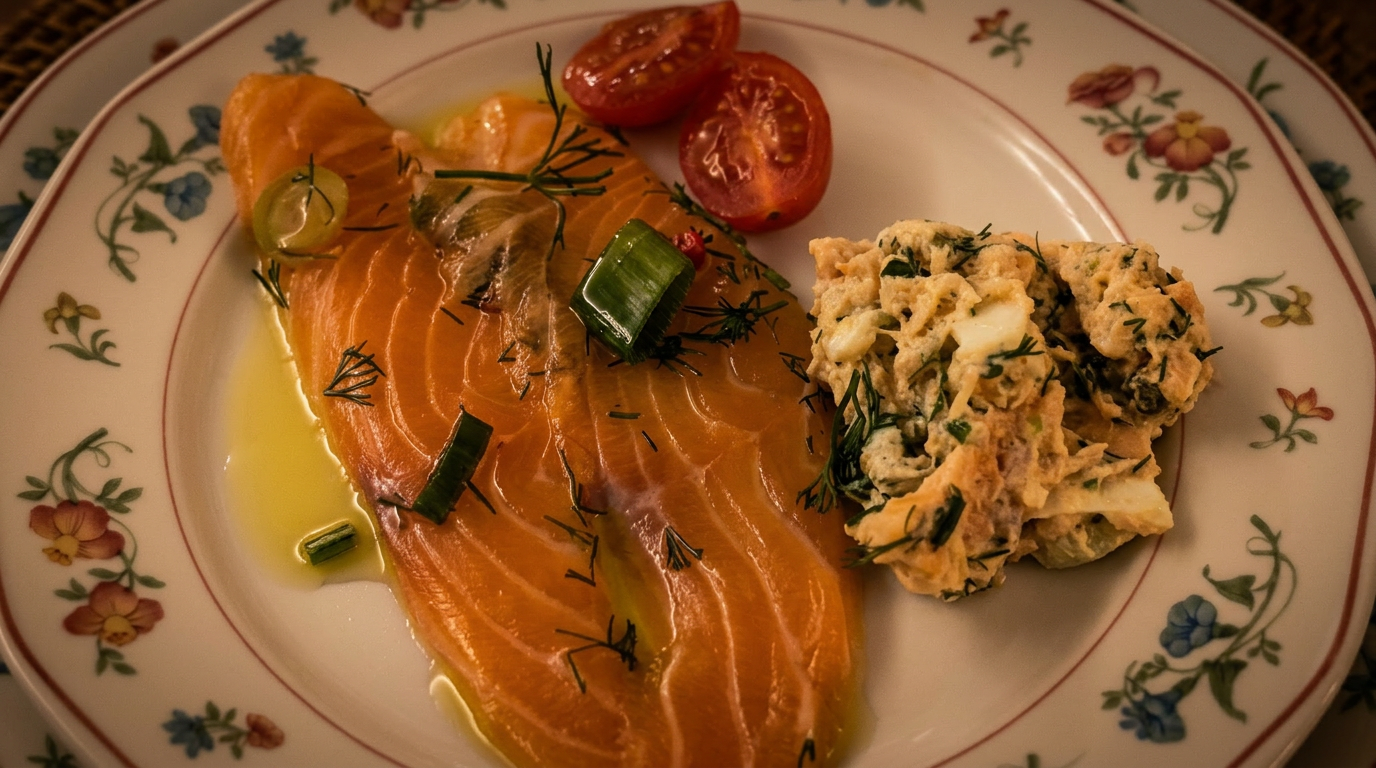
Some conversations change the course of things. A few weeks ago, I met up with my friend Vinni, whom I hadn't seen in a while. He had clearly changed. Leaner. More energetic. I simply asked him: "Wow... how did you do it?" His answer surprised me. He hadn't hired a traditional coach. He had simply turned an artificial intelligence tool into a personal nutrition coach. The algorithm on the plate His approach was surprisingly simple. For several weeks, he shared his entire daily diet with his AI assistant. Every meal. Every snack. Every detail. Then he asked for an analysis: calorie counting, protein/carb/fat ratios, and areas for improvement. Herb-cured salmon gravlax. Noble proteins, omega-3: the plate AI recommends. Gradually, the tool began suggesting surgical adjustments. More protein. Fewer empty calories. And above all: an implacable logic. "You can't imagine," he told me, "I eat like 9 eggs a day, lots of chicken, protein shakes... and with all that, I'm losing weight!" Less weight. More energy. A sense of total control regained. Deciding to take action That very evening, the entrepreneur in me was intrigued. I researched, compared, cross-referenced data. And I decided to test the same approach, adapted to my own metabolism. For three weeks now, I've been using artificial intelligence as a personal nutrition coach. My goal is mathematical: consume between 1,200 and 1,500 calories per day to generate an equivalent daily deficit. In theory, this allows you to lose about 1…