 Travel
Kerkyra (Corfu): what to see in the Venetian old town
Par Gabriel Goldberg
16 July 2026
9 min read
Kerkyra is the Greek name for Corfu. 2026 guide: UNESCO old town, two Venetian fortresses, surviving artisan workshops, where to eat and when to go.
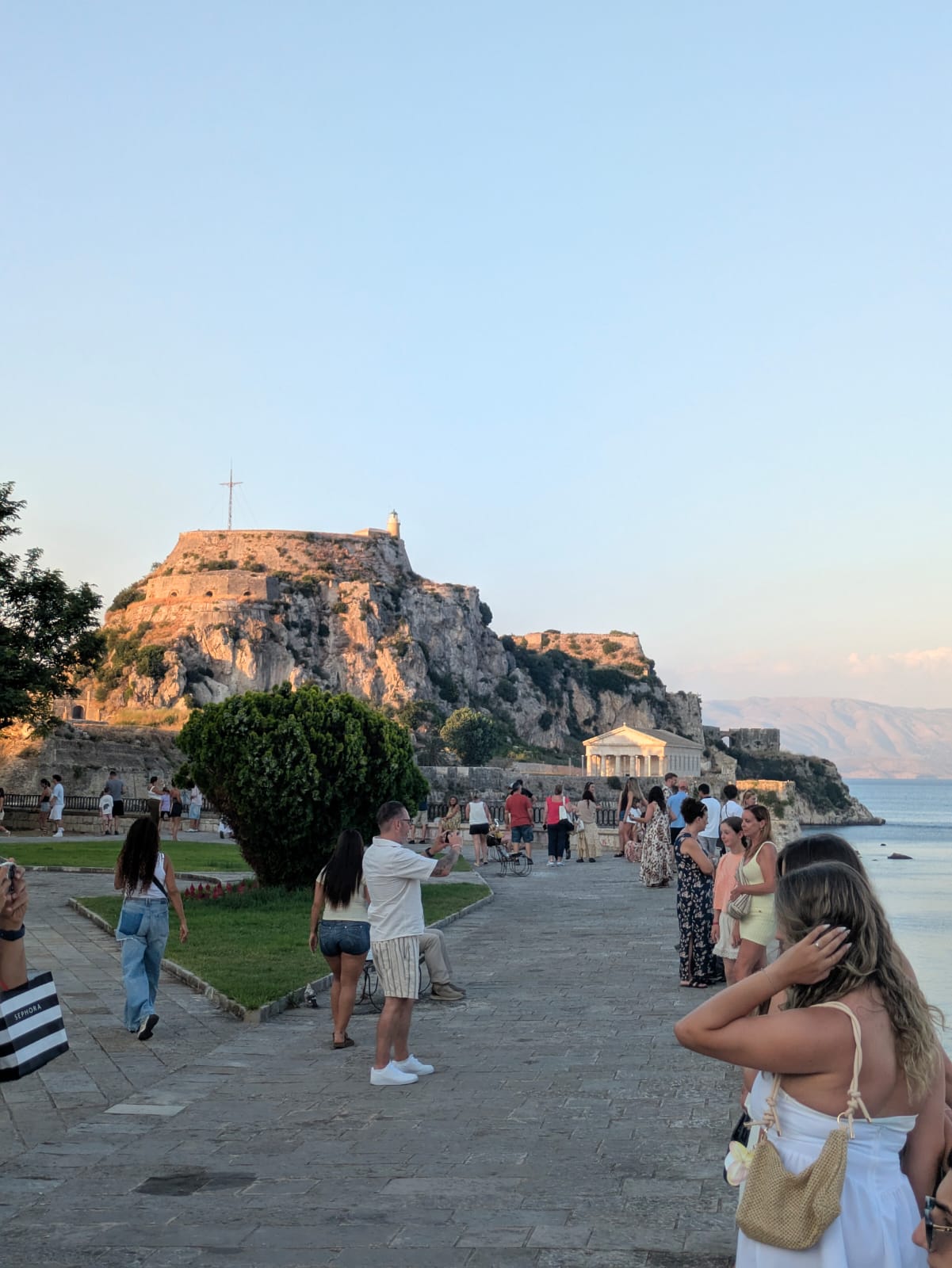
There are Greek islands you visit for the sea. And then there is Corfu — which you visit for the city. Kerkyra, the island's capital, looks like nowhere else in Greece: narrow lanes rise between four- and five-storey ochre buildings, its churches are crowned with royal-blue ceilings edged in gold, and its Liston — arcades along the great esplanade — is an unabashed cousin of Paris's Rue de Rivoli. One word explains all of it: Venice. Kerkyra or Corfu? Same island, same town: Kerkyra (Κέρκυρα) is the official Greek name, while "Corfu" comes from the Venetian Corfù , itself from Koryphō ("the twin peaks" of the Old Fortress). On flights and ferries, look for Kerkyra / CFU . Priorities: the UNESCO old town and its kantounia, the two Venetian fortresses, the Liston, Agios Spyridon church and the last surviving artisan workshops. The Spianada esplanade and the Old Fortress (Palaio Frourio) at sunset — the Venetian heart of Corfu. Four centuries under La Serenissima (1386–1797) Corfu passed under Venetian rule in 1386, at the request of its own citizens, who preferred the protection of the Doges to Ottoman raids. La Serenissima would stay four hundred and eleven years , until Venice fell to Napoleon in 1797. Corfu is the only significant Greek territory never occupied by the Ottomans — a fact that explains almost everything about the city today. The Venetians held Corfu because it was the forward sentinel of the Adriatic. They built, expanded, refortified constantly. The Old…