 Style
Style
Eggs in Scotland & the UK: shell colour, price and quality explained
Par Gabriel Goldberg
30 August 2026
9 min read
White, brown, blue and duck eggs: why the British egg aisle is Europe's richest, what shell colour really tells you (nothing), why brown eggs cost more, and how to choose on freshness and hen diet instead.
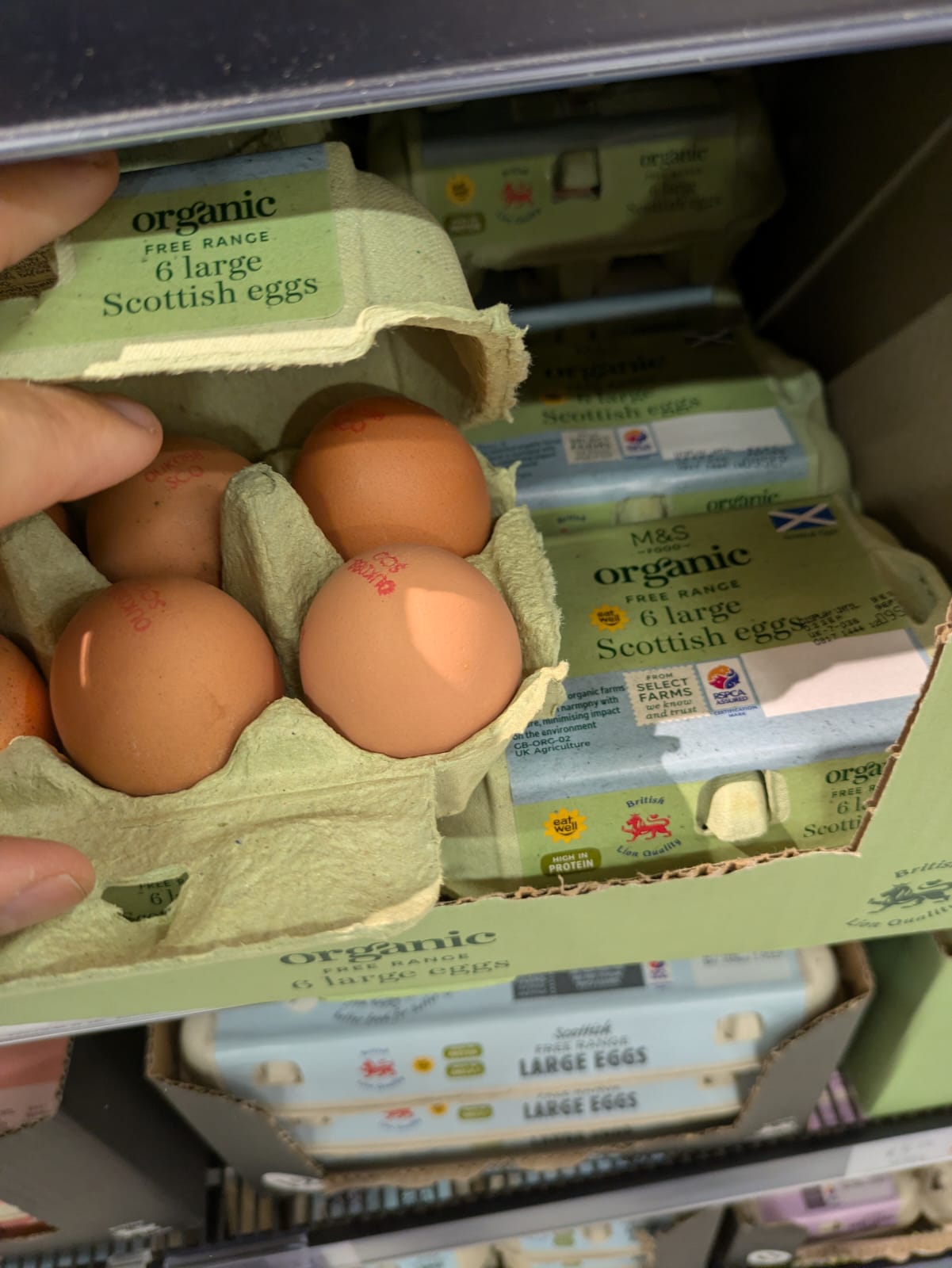
In Scotland — and across Britain — eggs are not a commodity. They are an aisle, a taxonomy, almost a regional identity. Open the chilled door of a Marks & Spencer in Edinburgh and you see it immediately. Where a continental supermarket offers three or four lines, here there are twenty: white, brown, pale blue, large, mixed, organic, free range, rich golden yolk, Burford Browns, duck eggs. And the detail that struck me most: the range is regionalised. In Scotland the box says " 6 large Scottish eggs ", with a Saltire printed beside the logo. A green Marks & Spencer box labelled organic free range 6 large Scottish eggs held in front of the chiller, a Saltire printed on the lid and six brown eggs stamped in red ink inside. The short answer: eggshell colour comes down to hen genetics — not nutrition, flavour or quality. Brown, white and blue eggs cook and taste essentially the same. Higher prices for brown or specialty eggs reflect production costs and marketing , not inherent superiority. What actually affects performance is freshness, the hen's diet and handling , so choose on those rather than on shell or yolk colour. 1. The British egg aisle as a cultural object The UK is one of the few European markets where the egg kept the status of an authored product. Marks & Spencer is the most elegant version of it: the online eggs listing runs to dozens of lines, and the physical shelf changes depending on where you are on the island. In Scotland, Scottish eggs and the blue-and-white…