 Travel
Parga (Epirus): Venetian history, pirates, 1819 exile to Corfu
Par Gabriel Goldberg
18 July 2026
10 min read
Complete guide to Parga in Epirus: Venetian citadel, centuries of piracy, the mass 1819 exile to Corfu, olive oil museum, Panagía islet. The definitive Parga article.
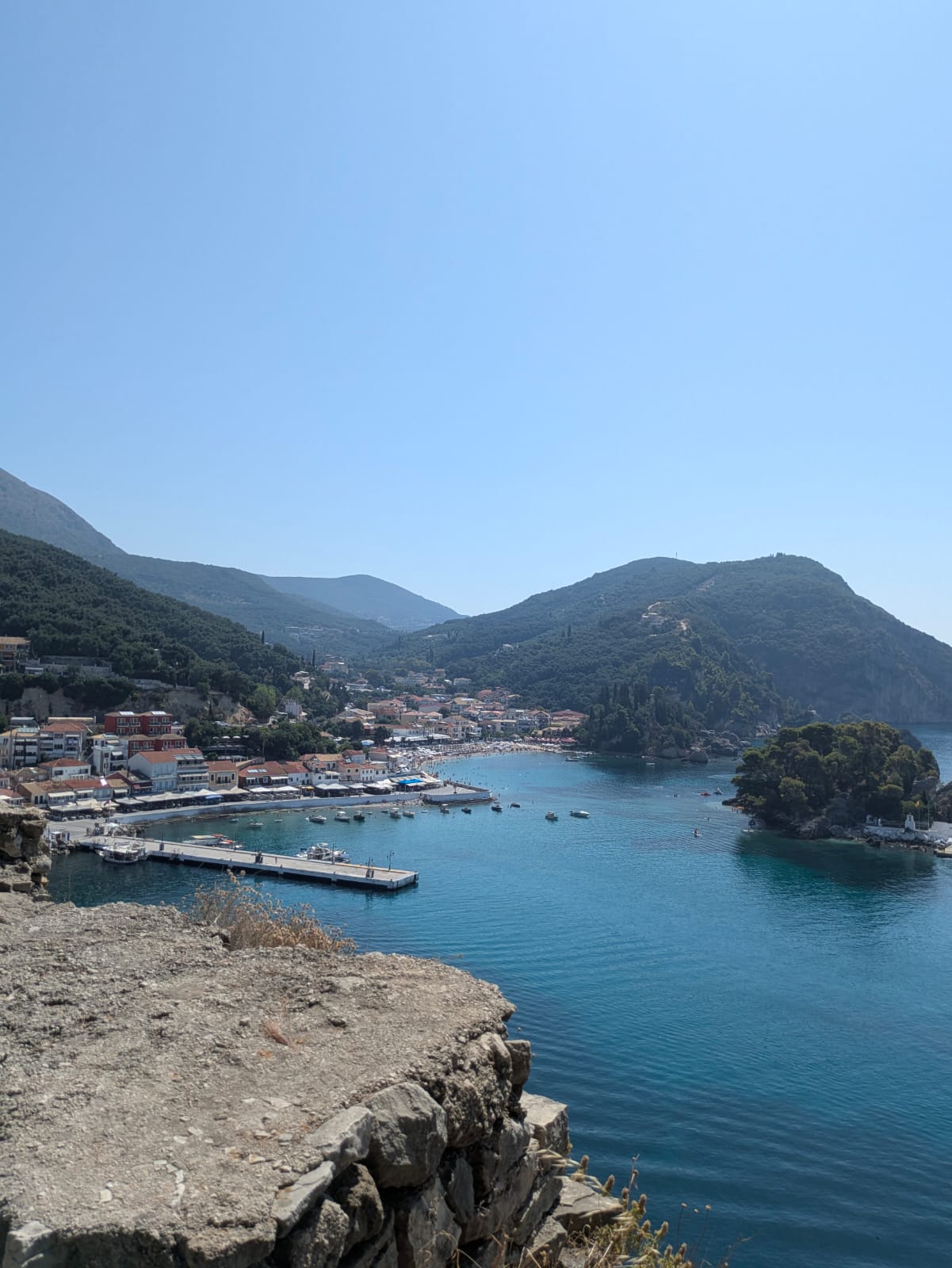
You arrive at Parga by sea, or by a road plunging down from the mountains of Epirus toward a crescent of turquoise water. On top, a Venetian citadel . Below, a pocket port wedged between islets. Facing the town: the islet of Panagía , a white chapel on a rock — a miniature cousin of the Bourtzi at Nafplio. The landscape looks like a postcard. It hides one of the most violent — and most dignified — stories of the Greek coast. View of Parga from the Venetian citadel: harbour, jetty, Panagía islet, and old town clinging to the hill. Parga is a small town of just 2,088 inhabitants according to the 2011 census, in Epirus, facing the Ionian Sea . It sits 49 km south of Igoumenitsa and 67 km north of Preveza. Offshore, on clear days, you can spot Paxos , Antipaxos, sometimes Lefkada — the whole Ionian chain we already walked through in our grand guide to the Greek islands . But Parga is not an island: it is a coastal enclave , a water-gate onto mainland Greece — and that is the whole story. A geographic setting that explains everything Parga sits around a bay closed by rocky islets alternating with beaches . On the nearest islet stands the small church of Panagía ; on the other, further south, a chapel dedicated to Saint Nicholas , patron of sailors in Greece. The citadel tops out at 64 m. The bay was carved by geology as a near-impregnable natural port — and coveted for exactly that. The ancient name of the town, Chypargós (Χυπαργός), literally means "under twilight" . It probably…