 Travel
Magnificent weeds: in praise of giant adventives in June
Par Gabriel Goldberg
16 June 2026
7 min read
Hollyhocks, thistles, monkshood, dead-nettle, urban wastelands: a tribute to the spontaneous plants that grow without permission and become magnificent each summer.
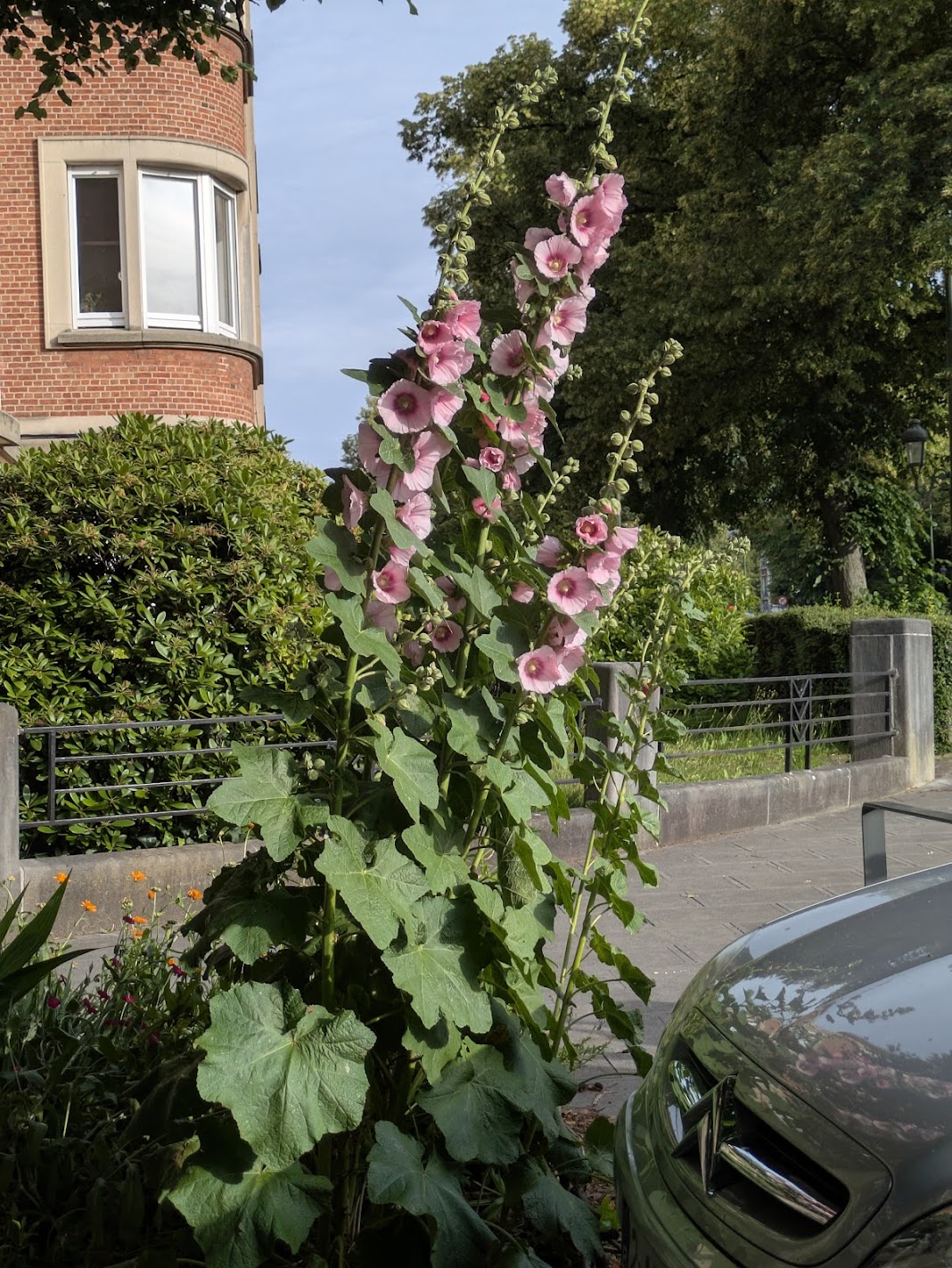
No one planted them. No one waters them. We pull them, trample them, mow them. And every summer, they come back — taller, more insolent, more beautiful than most of the plants we cultivate with effort. This article is a love letter to weeds — to the so-called "bad" herbs that, around mid-June, reach their peak and remind us that much of the world's beauty grows without permission. A three-metre hollyhock, sprung from a pavement crack in Brussels, June 2026. The word "weed" is the first mistake Botanists prefer adventive — from the Latin advenire , "to arrive". A plant that arrives uninvited. Agriculture adds "unwanted", because it competes with wheat or beets. But step off the field and the definition collapses: on a sidewalk, in a vacant lot, at the foot of a lamppost, a weed takes nothing from anyone. It occupies . It colonises . It repairs , often, what our depleted soils can no longer produce on their own. The shift is recent. Progressive cities have banned glyphosate, urban-ecology departments are publishing inventories of spontaneous flora, and Brussels Environment now logs tree pits as micro-habitats. We are starting to understand that these plants are not against the city — they are its natural flora, provided we look. Mid-June: peak of the giants The hollyhock in the opening photo was not planted. It seeded itself, as Alcea rosea has done since being brought back from the Ottoman Empire in the sixteenth century. A taproot reaching down a metre and a half, a flowering…